The seasons have a big impact on lawns, wet winters, warm, humid spring and summers invite a host of lawn pests and diseases, but with the correct watering regime, good soil health and regular feeding, lawns will build up a natural resistance to pests and diseases.
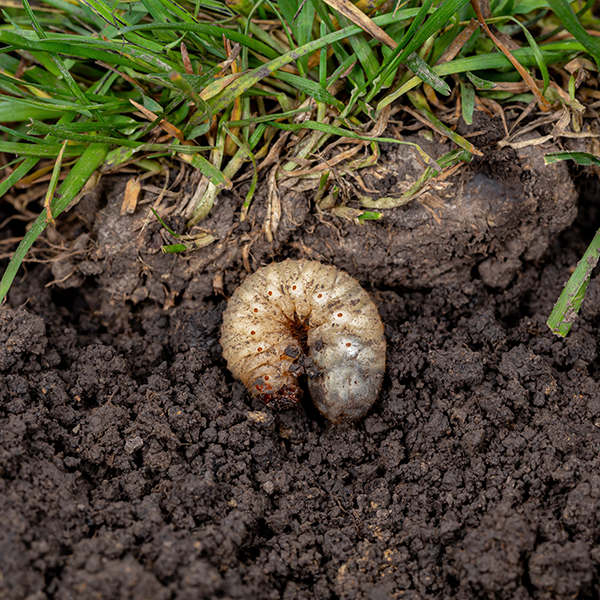
Grass grub
The larval stage of the native New Zealand grass grub beetle which emerges from the soil in late spring, early summer to mate and lay its eggs. Grass grub cause grass to brown and die off feeding on the roots in the soil.
Symptoms Lawns turns patchy yellow, then brown, grass dies off, the ground feels spongy underfoot and comes away in clumps as the roots have been eaten away. Birds scratching, pecking or digging up the lawn to get at the grubs, especially Starlings.
Season Late summer and early autumn when the grubs come to the surface to feed, March to July.
Solution
- Using a spade dig a small square 20cm deep (spade depth), look for creamy white grubs in the soil.
- If grubs are present, use a suitable lawn insect control product in late summer and early autumn.
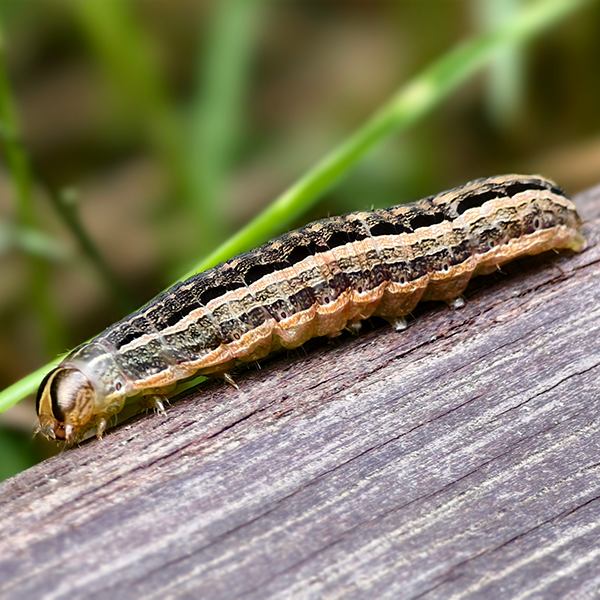
Porina and armyworm
Caterpillars are creamy yellowish grey colour around 7cm long. They feed on the surface and then burrow into the soil creating tunnels, emerging at night to feed on the lawn. Porina caterpillar cause bare patches in lawns feeding above ground on the grass.
Symptoms Rapidly expanding bare patches where the lawn has been chewed off, fresh damage appears overnight. Tunnels appear in the lawn. Damage becomes obvious in autumn, tunnels appear in the bare patches.
Season Late summer, autumn and winter.
Solution
- Check at night with a torch and look for caterpillars as they are nocturnal feeders.
- Apply a suitable caterpillar/armyworm control to the lawn and water in if required.
- Keep the lawn well fed and not too long.
- Rake out dead material and over sow thin patches to help the lawn recover.
Learn how to identify and treat common fungal diseases in lawns and other common lawn problems.