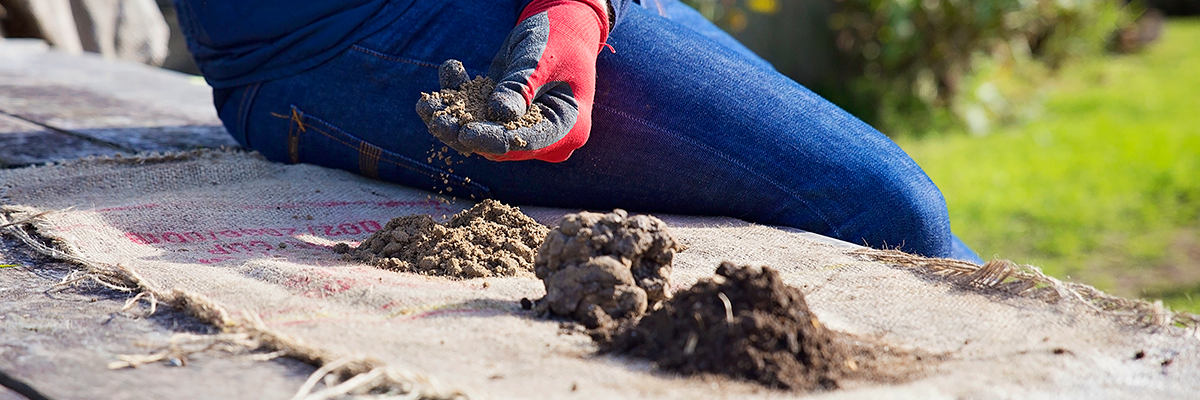
Here are some quick DIY tests you can use at home to check your soil health and see what type of soil you have - no special equipment required.
The three main soil types are sandy soil (drains quickly, low nutrients, loose texture), clay soil (holds water, rich nutrients, dense and sticky) and loam soil (crumbly texture, fertile, retains moisture well). You can learn more about each of these soil types here >
The squeeze test
Wet a handful of soil.
- Forms a tight ball? It’s clay.
- Falls apart? It’s sand.
- Holds shape but crumbles? It’s loam.
The rub test
- Rub wet soil between your fingers
- Clay is sticky, sand is gritty, loam is somewhere in between.
The jar test
- Mix up soil in a jar with 1/3 soil 2/3 water + teaspoon of dishwashing liquid.
- Shake well and leave for 24-48 hours.
- Sand settles at the bottom, silt loam next, then clay.
- These layers show the composition of your soil - the thicker the layer, the more prominent the soil type.
Other tips
Look for life - There are many beneficial soil organisms you can't see, but healthy soil is teeming with life. Dig a small hole and see what's there - worms are particularly good indicators - they aerate the soil and help break down organic material.
- Lots of life = good sign
- Bare, lifeless soil = needs organic matter
Observe any odour - Bad smells usually mean poor drainage or low oxygen.
- Healthy soil smells earthy and fresh
- Unhealthy soil may smell sour, rotten, or sloppy
Observe water behaviour - Dig a hole in your soil as though you are going to plant something, then in pour a cup of water – this can tell you a lot about structure and organic matter levels.
- Healthy soil absorbs water steadily.
- Unhealthy soil pools on top or drains away instantly.
Watch your plants - Plants are honest reporters. Often, the issue isn’t the plant - it’s the soil, or simply the wrong plant for that spot.
- Are they growing evenly?
- Do they wilt quickly after watering?
- Are leaves yellowing despite regular feeding?
- Is the plant in the right place?
Post a comment
Simple at-home soil tests Comments
Be the first to write a comment