Fungal diseases can be soil-borne or wind-blown. Different fungal diseases affect lawns at different times of the year, most are successfully controlled using specific lawn fungicide sprays as well as good cultural practices, some problems are easily remedied with improved watering, feeding and drainage.
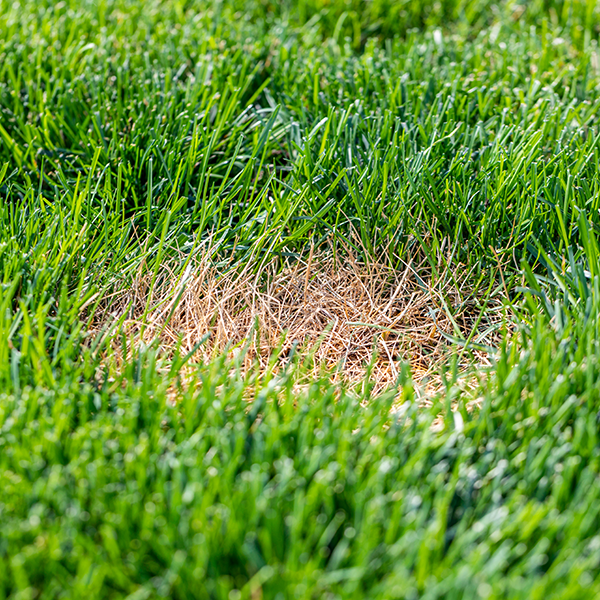
Brown Patch
Symptom Discoloured light straw / brown coloured patches appear during warm humid weather that spread and merge causing bare patches of lawn. Caused by fungus Rhizoctonia spp.
Season spring / summer / autumn
Solution
- Improve soil drainage by aerating the soil either by coring, using spikes on shoes or a garden fork.
- Remove thatch build up in autumn or early spring with gypsum or mechanically using a scarifier.
- Avoid high nitrogen fertilisers in warm humid periods.
- Apply a fungicide specific to lawns.
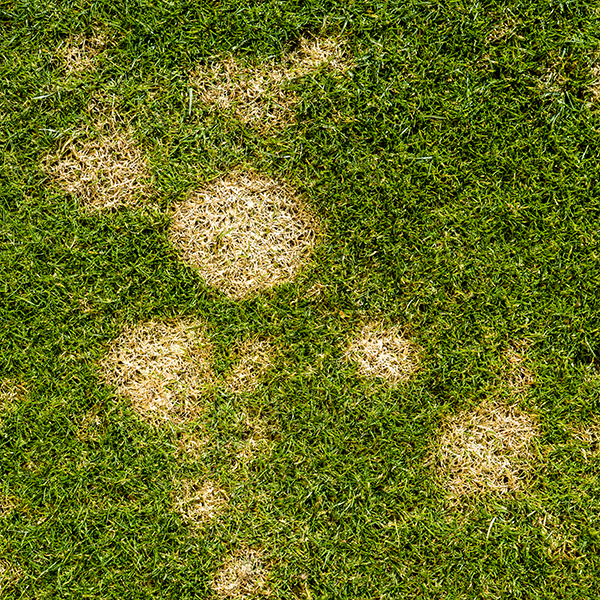
Dollar Spot
Symptom Small straw coloured spots the size of a dollar coin that turn brown and die off. Cobwebby fungus may appear in the patch in the early stages of infection. Common in lawns that are overwatered or not correctly maintained with low fertility. Caused by fungus Sclerotinia spp.
Season summer and autumn
Solution
- Water in the morning so that the lawn has a chance to dry off.
- Raise mowing height slightly and avoid cutting the lawn too short.
- Feed with a balanced lawn fertiliser to help the grass outgrow the damage.
- Use a suitable lawn fungicide according to label directions.
- De-thatch and spike the lawn with a fork or shoe spikes to improve aeration and drainage.

Lawn Rust (Crown rust)
Symptom Fine yellow orange dusty powder on grass blades that rub off when touched. Grass appears dull, thin and slightly yellow overall. Affects rye grass and tall fescue. Prevalent after periods of drought and then high rainfall. Caused by fungus Puccinia spp.
Season Late spring, summer to autumn on underfed lawns.
Solution
- Water in the morning so that the lawn has time to dry out during the day and consistently throughout the growing season.
- Fertilise with a balanced specialty Tui lawn fertiliser to encourage strong new growth.
- De-thatch to help aerate the lawn, improve drainage by spiking with a fork or spikes on shoes in spring, early summer.
- If rust is severe or keeps returning, consider spraying with a targeted lawn fungicide.

Red Thread
Symptom Blades of grass develop a reddish-pink thread which discolours the lawn and causes thin patches. Prevalent in cooler damp conditions and usually caused by poor aeration, low nitrogen levels and inconsistent watering. Affects rye grass and fescue. Caused by fungus Laetisaria fuciformis.
Season Spring and autumn during periods of high humidity.
Solution
- Water in the morning so that the lawn has time to dry out during the day, and water consistently throughout the growing season.
- Fertilise with a balanced high nitrogen lawn fertiliser such as Tui LawnForce® All Purpose.
- Mow the lawn on a higher setting, avoid mowing too low.
- De-thatch and spike the lawn with a fork or shoe spikes to improve aeration and drainage in spring, early summer.
- Fungicide sprays are not required as this fungus is caused by a nutrient deficiency.
Learn how to identify and treat common lawn insect pests and other common lawn problems.