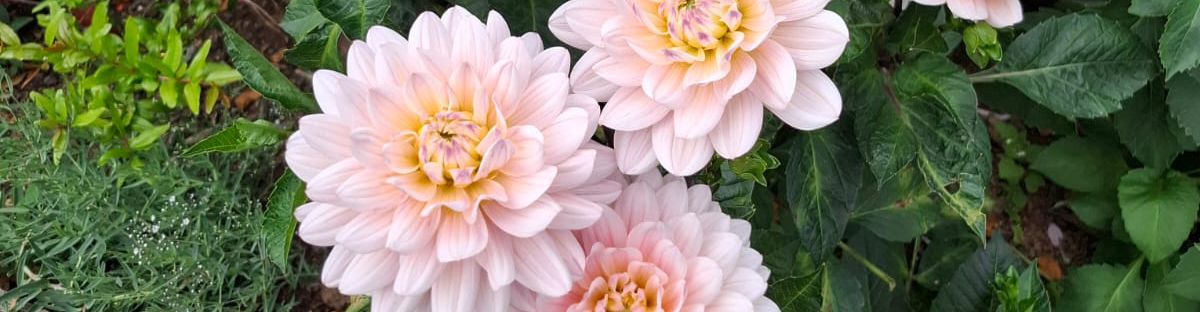
Dahlias are generous plants and when they’re given the right start they’ll reward you with months of colourful blooms.
Good soil, plenty of sun and steady watering help them grow strong and stay resilient through the season. Once they’re established, a little ongoing care, like staking, deadheading and watching for common pests, will keep them looking their best.
Staking plants
- Dahlias can grow over a metre tall and the large flowers can be heavy, causing flowers and stalks to break - especially after rain or in windy conditions.
- Add stakes when planting so you don’t disturb roots once the tubers establish.
- Bamboo stakes are usually enough for garden beds - more complex netting systems are optional.
- Tie plants with soft fabric ties or garden twine and keep tying them as they grow.
Pinching shoots, deadheading flowers and saving seed
- To get a bushier plant with more flowers pinch the growing tips when plants reach around 60cm to 1m tall. This encourages branching and more flowers.
- Pick blooms early in the morning, before the heat of the day, for longer-lasting cut flowers.
- Remove flowers that have finished blooming. You can try drying some of these to save seed for next season. Seed grown dahlias won’t always be true to type, but it’s a fun way to discover new blooms over time.
Pests and diseases
- Slugs and snails: Use safer baits such as Tui Quash to protect young shoots. Look for ragged holes in leaves and slimy trails on plants and soil often left by slugs and snails.
- Earwigs: Roll up newspaper, place it at the base of plants, and remove and replace it regularly to trap them. Look for chewed edges on petals and buds, often left at night. You might even catch them early in the morning still snoozing in the petals.
- Sucking insects (aphids, whitefly, thrips, mites): Keep an eye out for sticky residue, curling or distroted new growth, fine speckling or silver patches on leaves, or clusters of insects on stems or buds. Check with your local garden centre for suitable controls.
- Powdery mildew: Common in mid summer. You’ll see a white, powdery coating on the tops of leaves. Improve air circulation around plants and avoid overhead watering. Regular applications of a copper based spray are a good protectant, talk to your local garden centre for a suitable fungicide spray.
- Soft rot: can be a problem if soils are poorly drained. Plants may have wilting or yellowing leaves, stunted growth, and tubers may feel mushy or rotten if dug up.
After care
- In frost‑free areas dahlias can stay in the ground for several seasons as long as the soil drains well. After a few seasons they may need to be lifted and divided as tubers become overcrowded.
- The best time to lift tubers is autumn when the foliage has died down after the first frost of the season. Frost helps control any overwintering insect pests such as mites.
- Wash loose dirt off the tubers and dry in a sunny dry place with good airflow.
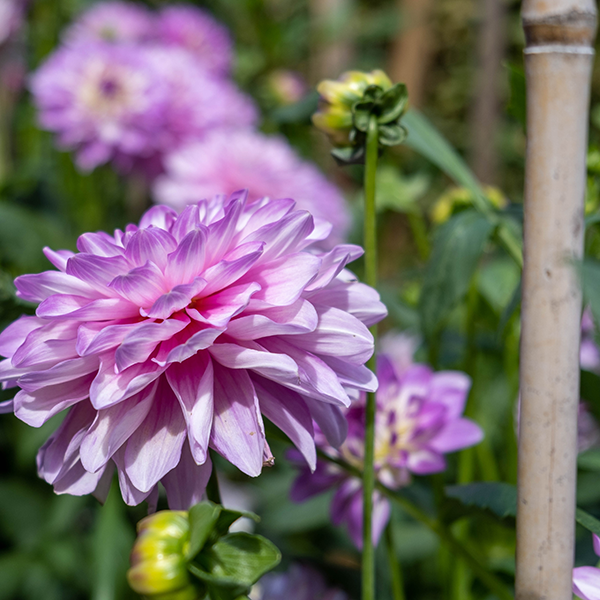
Add stakes at the time of planting
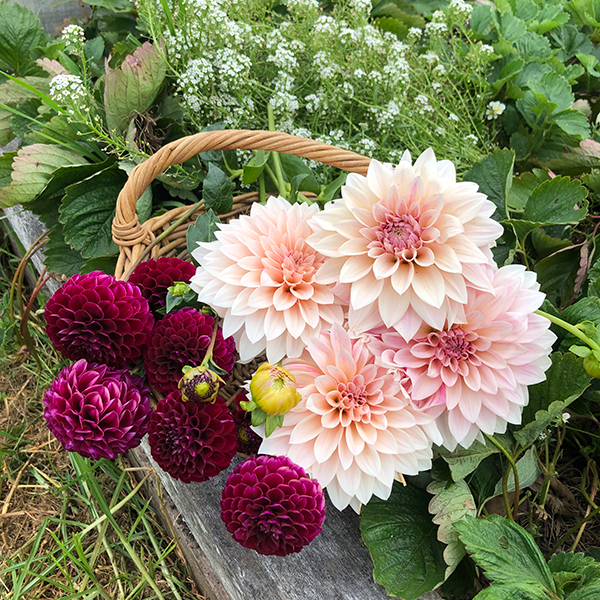
Pick in the morning for longer-lasting blooms
Learn more in our full Dahlia Growing Guide>
Post a comment
Dahlia care guide Comments
Be the first to write a comment