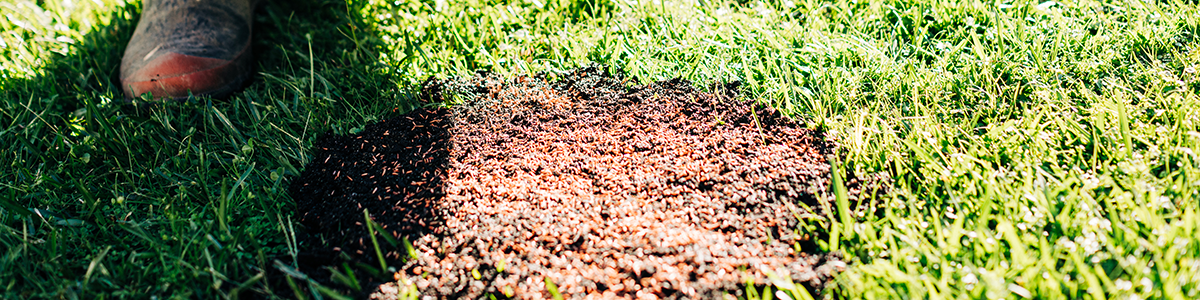
Autumn and spring are ideal to repair and renovate lawns, as temperatures are more stable, the heat is less intense, and soil moisture levels are higher.
Patching, instead of a complete lawn renovation, is done over small areas or multiple areas that have browned off. A lawn may need patching due to:
- Wear and use over the summer months.
- Bare patches due to drought or summer heat burning off the grass.
- Controlling broadleaf weeds, removing prickles.
- Dog urine patches.
- Moss removal.
Preparing a Lawn for Patching
Soil preparation is key.
- Mow the lawn on a low setting, using a catcher.
- Rake away dead grass, stones, and debris, and lightly break up the soil surface.
- Level the area to remove humps and hollows.
- Apply Tui LawnForce® Lawn Preparation Mix to a depth of 25-30mm, feathering it into the surrounding lawn. Top soil can be used, but there is a risk that weeds will be introduced to the lawn.
- Compact the area using the head of a rake, by stamping, or with a lawn roller.
- Water well to settle the soil before sowing.
Sowing a lawn patch
- Choose a lawn seed that matches or closely matches the existing lawn.
- Measure the patch area, apply seed at 30g/square metre and sow east to west, north to south for even coverage.
- Seed can be sown using a Tui LawnForce® Hand Spreader or Broadcast Spreader combined with Tui LawnForce® New Lawns fertiliser, this gives an even distribution of seed.
- Lightly cover the seed with Tui LawnForce® Lawn Preparation Mix and lightly rake ensuring the seed is in contact with the soil.
- Water the patched area after sowing seed.
- Continue watering at least twice a day depending upon the weather, don't allow seed to dry out during germination stage as it will not recover.
- Once established reduce watering to two or three deep waterings per week. Mow when grass height is 5-7cm.
Learn more about how to sow a lawn here >
related products