Before you plant anything it helps to understand the soil you’re working with.
Different soils hold water differently, release nutrients at different speeds and suit different plants.
Once you know what you’ve got you can work with your soil, not against it.
the three main soil types
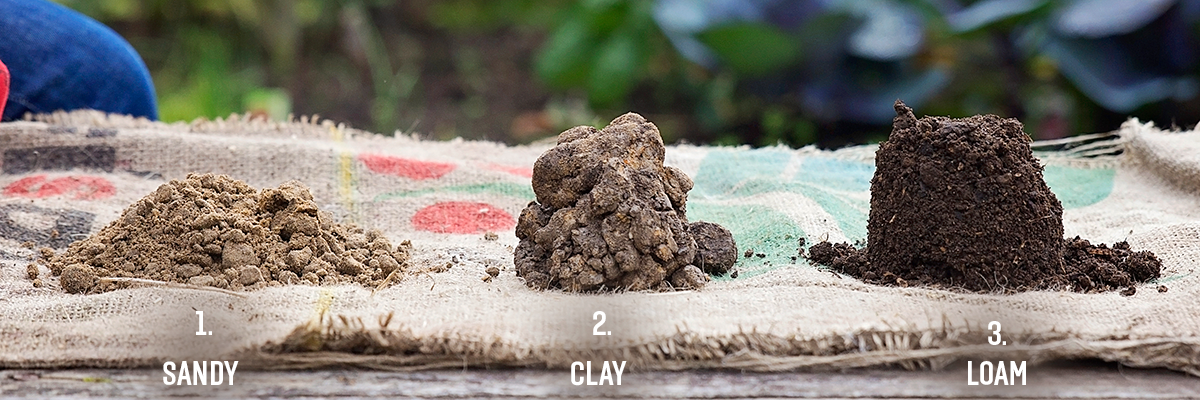
1. Sandy soil
How to recognise it: Feels gritty between your fingers, loose, drains very quickly, doesn’t hold shape.
What it means for your garden:
- Soil drains fast, which is handy in winter but challenging in summer.
- Being low in organic matter makes it harder for the soil to retain moisture and nutrients. Without the organic matter to cling to they can wash through quickly.
- Warms up early in spring.
Plants that can thrive in sandy soil: Lavender, rosemary, succulents, carrots, potatoes.
How to improve it:
- Add compost and organic matter regularly to help it hold moisture.
- Mulch to cover the soil and slow evaporation.
- Use slow release fertilisers or sheep pellets so nutrients stay in the soil instead of washing away.
- Fertilise regularly – liquid feed weekly with Seaweed Tonic or Seaweed & Fish.
2. Clay soil
How to recognise it: Feels sticky when rubbed between your fingers, cracks when dry, forms clumps easily.
What it means for your garden:
- Holds water well but can get waterlogged if too much moisture builds up.
- Rich in nutrients and organic matter but they are ‘locked up’ - not easily available to plants.
- The dense or ‘heavy’ clay soil can be hard for roots to push through and establish themselves.
Plants that can thrive in clay soil: Hydrangeas, hostas, roses, many fruit trees, brassicas.
How to improve it:
- Add compost regularly to help loosen and improve the soil structure.
- Add gypsum – it doesn’t change the soil pH but it can help break up clay and improve soil structure.
- Use mulch to protect the surface and reduce cracking.
- Avoid digging when wet - it compacts easily which removes the aeration plants need.
3. Loam soil
How to recognise it: Crumbly when rubbed between your fingers, holds together lightly, drains well but not too fast, dark colour.
What it means for your garden:
- The ‘gold standard’ - balanced water and nutrient holding capacity makes it rich, healthy soil.
- Easy to work with.
- Rich in organic matter with a balanced eco-system.
- Supports a wide range of plants.
Plants that thrive in loam soil: Almost anything - veges, flowers, fruit trees, herbs.
How to improve it:
- Maintain it with compost and mulch.
- Feed with natural fertilisers such as Sheep Pellets and Blood & Bone.
- Avoid over digging to protect structure.
Other soil types
Not too many of us have volcanic soil, but for those lucky enough to have them they are naturally fertile, full of minerals and drain well, although they can dry out in summer. Volcanic soil is dark, rich and often free draining with a fine texture. There are also in-betweens of the three main types, such as sandy loam and clay loam.
How to improve any soil type
No matter what you start with, you can build healthier soil over time. Here’s a simple, practical approach:
- Add compost and sheep pellets - Compost boosts organic matter and improves structure. Sheep pellets add slow release nutrients that support steady growth.
- Keep the soil covered - Mulch, living groundcovers, or even fallen leaves help to hold moisture, protect the surface, reduce weeds and support soil life.
- Avoid over digging - Too much digging disrupts soil structure, breaks up worm tunnels and fungal networks, dries the soil out faster and brings buried weed seeds to the surface. Gentle loosening is usually enough.
- Fertilise as needed - Improving soils and fertilising plant go hand in hand. Learn more about feeding your plants here >
related products
Post a comment
Know your soil type Comments
Be the first to write a comment